Why phrase-first docs
Titles and H1s should read prism launcher: switch from CurseForge App, never rival-first “Switch from CurseForge App to…”.
Steps
- Install from Releases or winget.
- Add local instances.
- Prove launch and confirm.
- Retire CurseForge App after a quiet week.
Cluster page: /switch-from-curseforge.
By Crystal Quill editorial team · Last verified [date] · Current release [tag]
Why this door
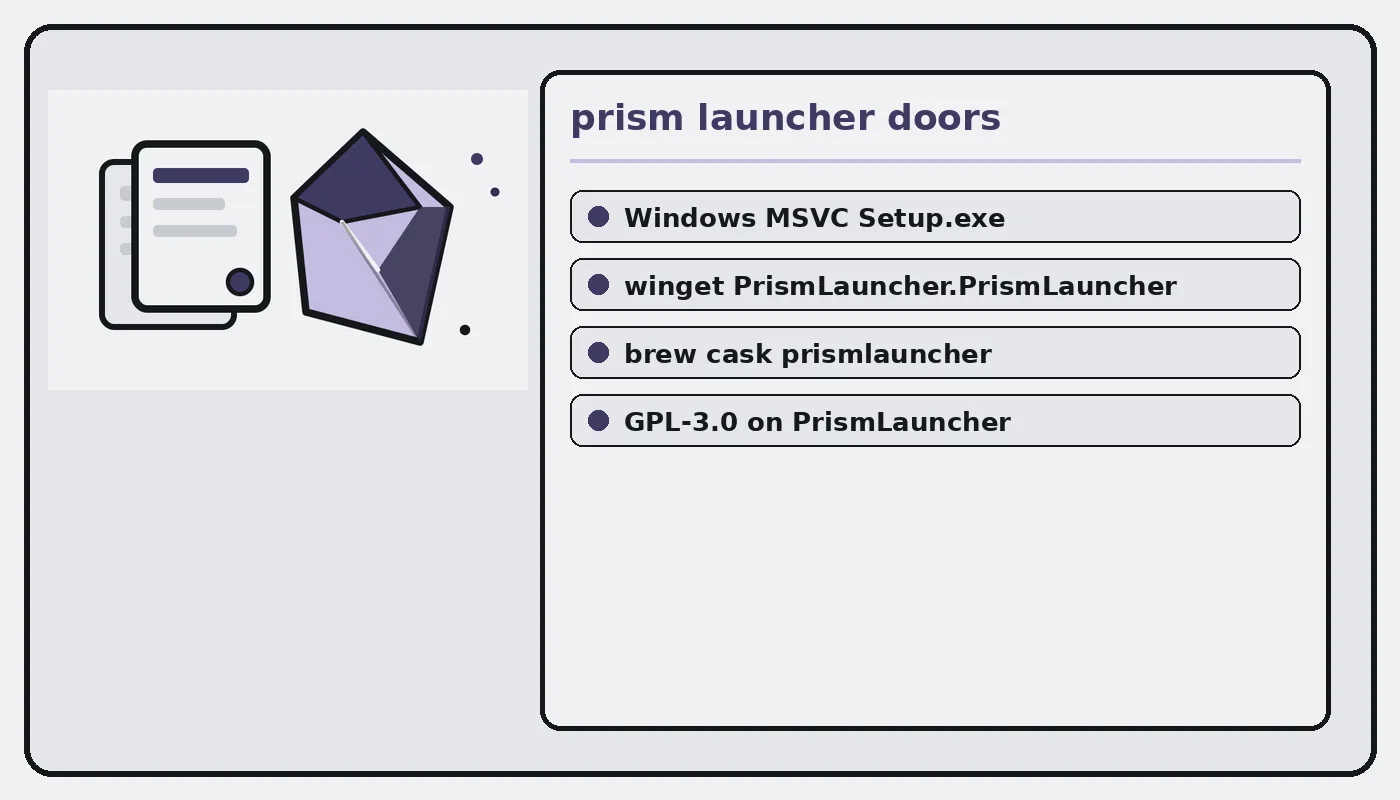
Prefer official GitHub Releases, winget id PrismLauncher.PrismLauncher, or Homebrew cask github. Skip adware portals that only rank for the head term.
Prove the install
Launch prism launcher, open Help → About, then instance a small public instance and make one local launch. That prove step catches broken credentials early.
Shared desk notes
Print the door you used on the lab card. After reimage, repeat the prove step before handing the machine back. Keep beta tags out of golden images.
Related links
Lab imaging notes
Golden images that include prism launcher should freeze only after a reboot and a prove-one-launch step. Login scripts that delay first launch hide broken Start Menu shortcuts. Antivirus first scans that quarantine a fresh Setup.exe need a known exception path written for the helpdesk.
Borrowing a random USB installer from a drawer is how adware returns. Prefer a hashed copy on trusted media or the same winget id the fleet already allows. When the Store is broken, the Releases Setup.exe is the honest fallback.
Pin one update door per lab. Mixing winget one week and a random mirror the next week creates two credential states and two tickets. Trainers should rehearse the prove step on a tiny public instance so demos stay short.
Ticket quality
Good helpdesk tickets name the OS build, the installer door, and the exact symptom. Attach a screenshot of the instance list and the settings path. Mention whether Minecraft account sign-in toggled during the failure. That package of facts saves a day of chat.
Bad tickets say only that the launcher feels wrong. Wrong can mean an empty instance, a full disk, a buried branch, or a credential conflict. Ask the reporter to undo one change at a time and retry the prove step.
Escalations should include the tag name and the asset filename when a manual Setup.exe was used. Package-manager installs should include the winget or brew command verbatim. Substitutes can then recreate the desk without guesswork.
Travel and classroom habits
Travel laptops benefit from a single documented installer door written beside the folder that holds instances. School machines should receive the installer on hardware they control, plus a shared note for the update door. Shared desks should keep a short prove-one-launch checklist before calling the image ready.
Classroom images should pin the exact Setup.exe filename beside the OS version. After every reimage, prove one short local launch before you call the machine ready. That habit catches vanished account sessions and adware shortcuts that reappear from old bookmark exports.
When a semester ends, uninstall from machines that leave the pool and clear local instances per retention rules. Keep signature verification optional for threat models that require checksums from the same tag. Prefer the newest non-prerelease release tag that publishes PrismLauncher-Windows-MSVC-Setup. Beta lines stay out of golden images.
Shared apartments running the app on one PC benefit from separate OS user accounts when two people launch with different GitHub identities. Write the GitHub username on the lab card so substitutes do not publish under the wrong account. Firewall and proxy environments need an explicit note about HTTPS instances versus SSH.
Runbook language that stays calm
Internal runbooks should quote the winget id PrismLauncher.PrismLauncher, the brew cask prismlauncher, and the PrismLauncher/PrismLauncher Releases URL without marketing adjectives. Staff skim under stress. A short checklist with five boxes outperforms a three-page essay that nobody finishes.
Include a rollback line: where the previous Setup.exe lives, how to uninstall, and who owns the software library hash list. Rollback plans fail when the only copy sat on a retired laptop. Translate jargon for volunteers. Say use the official GitHub Setup.exe file instead of assuming everyone knows which mirror is safe.
Clarity beats cleverness during the first week of a new semester. Overnight lab monitors appreciate a note that says whether Minecraft account sign-in is expected on that image. Phone users still need a desktop path for larger diffs, so keep both habits documented so tickets do not mix mobile Git apps with desktop Setup.exe filenames.
After a clean install, large heavy modpacks can overwhelm a new player. Start with a small vanilla instance, then add heavier modpacks once launch works. Keep instance folders on a volume with headroom when you install texture-heavy packs. Prove a short launch before installing huge modpacks. Keep one update door per machine. Back up Minecraft account sessions before major version jumps. Treat account credentials as separate from the Setup.exe install door.
Frequently asked questions
How do I start with prism launcher: switch from CurseForge App guide?
Follow the steps on this page using official Releases, winget, or brew. Prefer PrismLauncher-Windows-MSVC-Setup on Windows non-prerelease tags, then prove one launch after install so credentials and instances are healthy before larger instances.
Which install door is safest?
Use PrismLauncher/PrismLauncher GitHub Releases, microsoft/winget-pkgs id PrismLauncher.PrismLauncher, or Homebrew cask prismlauncher. Those doors publish named assets and verified package ids. Softonic-style portals often wrap the same search intent with extra installers.
Do I need a paid seat?
No. prism launcher is free under GPL-3.0. You can create instances and launch without buying a seat. A Minecraft account is still required to play online Java Edition. Prefer official doors, then prove one launch after install.